- June/July 2026 removals of ebooks from EBSCO and ProQuest subscription collections
Hello everyone,
For two of our large subscription ebook packages, books are added throughout the year (and their accompanying records are added to the catalogue), but removals happen only twice each year. This is an update on removals that will occur in June and July 2026. Lists of removed ebooks are attached to this post.
Please note that this is routine collection maintenance. This maintenance is not related to budget cuts.
ProQuest Academic Complete
ProQuest will remove 37,256 ebooks from the ProQuest Academic Complete ebook subscription package. Usage data illustrate that 3% (n=1,104) of removed titles had seen use at the U of A in the past 24 months.EBSCO Academic North America
EBSCO will remove 3,798 ebooks from the EBSCO Academic NA ebook subscription package. Usage data illustrate that 6.3% (n=241) of the removed titles had seen use at the U of A in the past 12 months.In the CSU, we’ve taken steps to prevent loss of access to ebooks that have seen some use. We already have several of the most-used books on other platforms (e.g., OVID, Taylor & Francis, JSTOR), and have placed orders for the remaining titles.
If you have questions or concerns about these changes, please email csu@ualberta.ca.
- 4 New Newspapers in the Peel’s Prairie Provinces
The Pembina News Advertiser (1956-1965) was a local newspaper based in Drayton Valley, Alberta, and founded by Art Playford in 1956. It served the region until approximately 1965, when it was succeeded by the Western Review. We’ve digitized a partial run of the paper covering the years 1965-1972, 1980-1989, and 2013-2016.
Delia Times (1919 – 1960) was the local paper from the Village of Delia, Alberta. In addition to local interest, the Delia Times newspaper archive is important as a primary source of information about Violet McCully Barss, who was Reeve of the Village of Delia from 1920 through January 1922 and the first woman to head a municipality in Canada.
The Elk Point Review (1983 – 2020), originally titled the Elk Point Lakeland Review. In 2020, the Bonnyville Nouvelle, Lac La Biche Post, St. Paul Journal and Elk Point Review were amalgamated into the online publication, Lakeland Today.One of the most common digitization requests we get from local community groups is to digitze their local newspapers. Digitizing local small-town newspapers preserves fragile records of everyday life—births, events, and community stories—that might otherwise be lost to time. These most recent additions have all been in collaboration with local history groups or the publishers themselves.
To expand the Alberta Community Newspaper digitization project, we have partnered with the Alberta Legislative Library and borrowed over +200 rolls of microfilm copies of additional titles. Watch for those going online this summer.
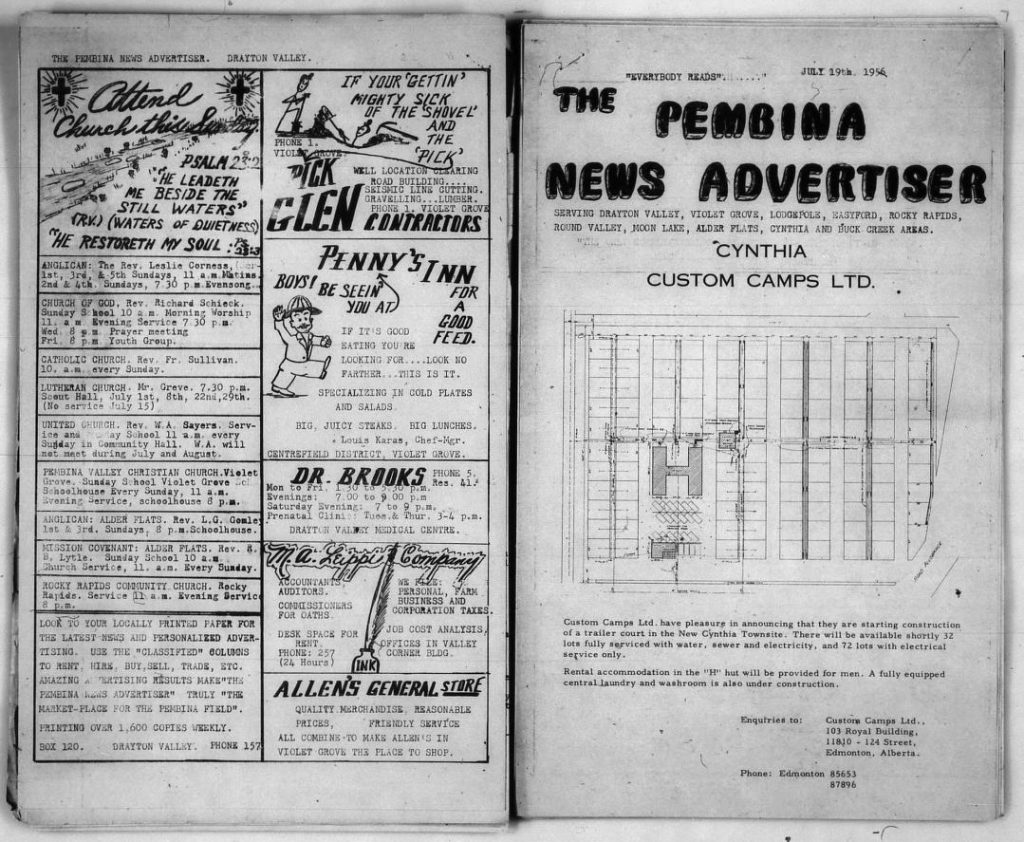
Pembina News Advertiser (1956-07-19) 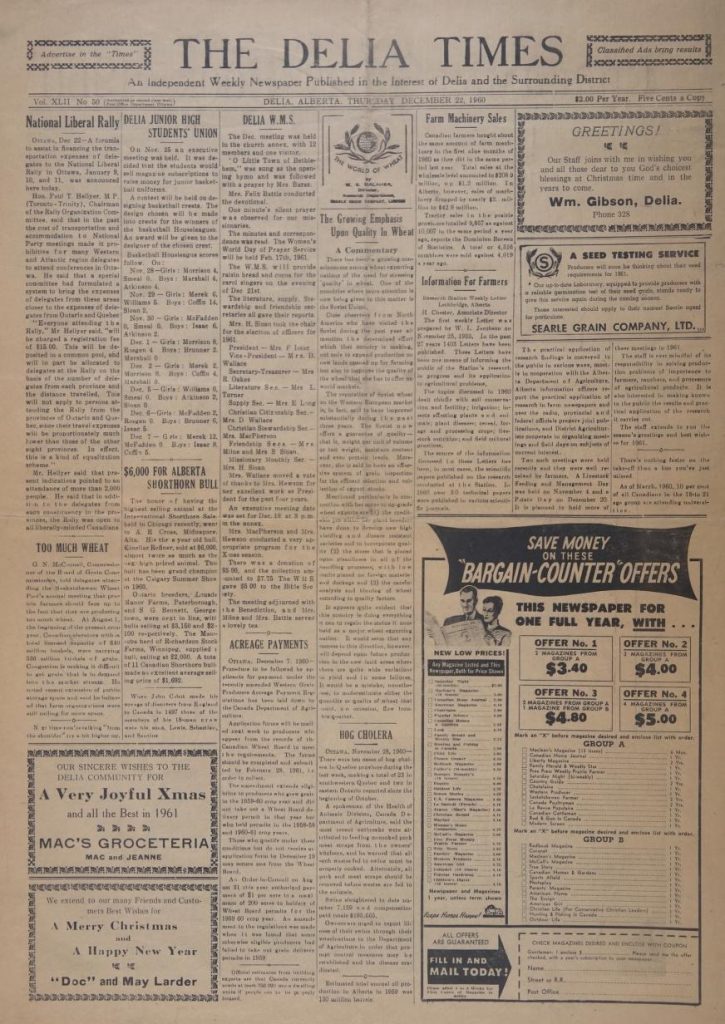
Delia Times (1960-12-22) 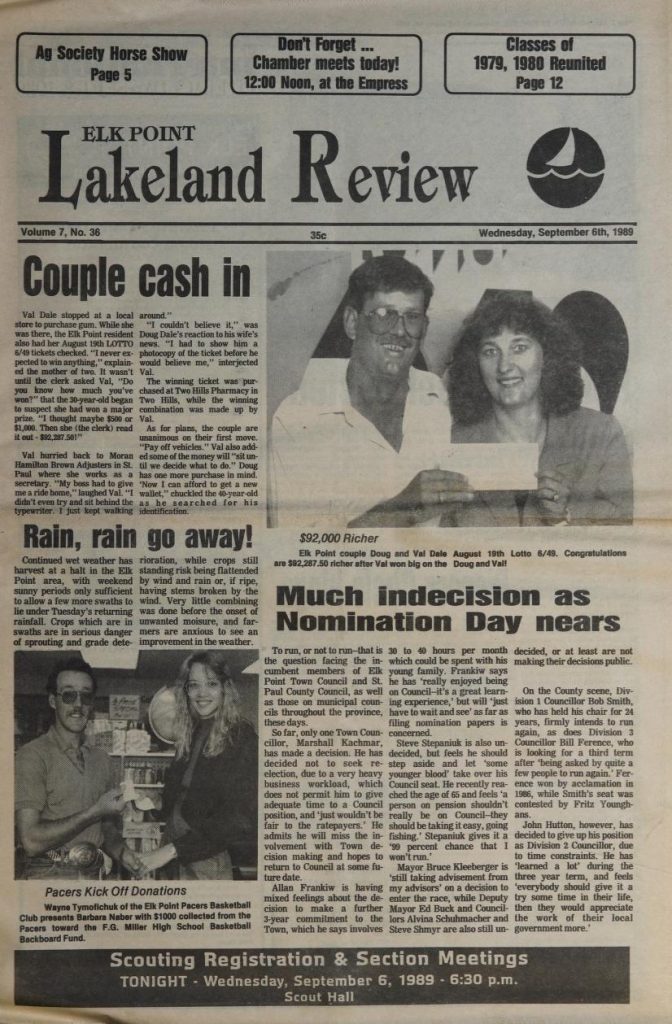
Elk Point Review (1989-09-06) - COPPUL Collections Community event, May 21: “Was cancelling a Big Deal a big deal?”
Sheldon Armstrong from the University of British Columbia and Alison Henry from the University of Alberta will discuss their recent experience cancelling a big deal at each of their institutions, how the process was handled, and how it’s been going since the cancellations.
May 21, 2026, at 1:30 pm Mountain time. Open to all.
Register here: https://us02web.zoom.us/meeting/register/pR_-TMrgT6eaNJnTRVeY6g
Presenters:
Sheldon Armstrong: From August 2016 to December 2025 Sheldon Armstrong was the University of British Columbia Library’s AUL Collections, helping craft and implement balanced Collections Budgets. In January 2026 he moved into the role of UBC Library’s Geospatial Services and Strategic Data Librarian, a liaison role that also includes a focus on building the Library’s use of Collections related data to help better inform decision making.
Alison Henry: Alison Henry is the Head, Collection Strategies at the University of Alberta Library in Edmonton, Alberta. She is a firm believer in the importance of library collaboration, and her professional interests include information literacy, collection assessment, and bibliographic transparency. Away from the library, you can find her outdoors: skiing, paddling, hiking, or just reading in a backyard hammock.
- Changes to Downloading Ebooks on the EBSCO Platform
EBSCO is replacing Adobe Digital Editions (ADE) with a new digital rights management (DRM) software, Readium Licensed Content Protection (LCP). Patrons will still need an ebook reader on their devices to download full ebooks, but they will not need to have a separate account to do so (like with ADE). EBSCO recommends patrons use Thorium Reader, but other ebook readers will work with Readium.
This new software will be enabled for UAlberta on May 19th.
What’s changing:
- DRM technology: LCP DRM will replace Adobe DRM for EBSCO eBooks downloads.
- Reader app: For DRM-protected downloads on desktop, EBSCO recommends Thorium Reader.
- Patron login: Patrons will continue to use their MyEBSCO accounts for personalization and license control. However, to open their first DRM file in Thorium on each device, they will enter a one-time EBSCO passphrase.
Further information can be found on this EBSCO blog post and this FAQ page. Download information for Thorium Reader is available here: https://thorium.edrlab.org/en/. Thorium Reader will not be downloaded onto library workstations.
Important note: this change will only affect full ebook downloads. The experience for reading EBSCO ebooks online and downloading single chapters remains unaffected.
- January 2026 removals of ebooks from EBSCO subscription collection
Hello everyone,
For two of our large subscription ebook packages, books are added throughout the year (and their accompanying records are added to the catalogue), but removals have historically happened only twice each year. As of 2026, ProQuest will only remove ebooks from our subscription package once a year – in June. However, EBSCO will continue to remove ebooks twice a year (in January and July). This is an update on the January 2026 removals from the EBSCO ebook subscription package. A list of removed ebooks is attached to this post.
Please note that this is routine collection maintenance. This maintenance is not related to budget cuts.
EBSCO Academic North America
EBSCO removed 8458 ebooks from the EBSCO Academic NA ebook subscription package. Usage data illustrate that 3.1% (n=265) of the removed titles had seen use at the U of A in the past 12 months.In the CSU, we’ve taken steps to prevent loss of access to ebooks that have seen some use. We already have several of the most-used books on other platforms (e.g., OVID, Taylor & Francis, JSTOR), and have purchased the remaining titles.
If you have questions or concerns about these changes, please email csu@ualberta.ca.